



Key Takeaways
-
Encryption and zero-trust policies are the foundation of mobile device security.
-
MDM/EMM software automates compliance and monitoring.
-
Educating employees reduces the risk of human error.
-
Regular audits and updates are essential for continuous protection.
In today's digital landscape, mobile devices have become necessary tools for both personal and professional use. However, these endpoints serve as gateways to large networks of sensitive information, such as company data and personal information, making mobile device security and mobile app encryption essential elements of an organization’s cybersecurity best practices.
Because mobile devices are used in various environments, including public Wi-Fi networks and shared workspaces, they face heightened exposure to cyber threats such as malware on phones, mobile network hacking, phishing and more. Proper mobile device security and encryption strategies are critical to ensuring a well-rounded cybersecurity strategy.
Why Protecting Sensitive Data on Mobile Devices Is Critical
The ability to use mobile devices anywhere in the world makes them prone to more mobile threats than other types of technology. Cyberattacks come in various forms, including the following:
-
Malware and ransomware attacks
-
Phishing schemes targeting credentials and sensitive information
-
Physical theft of devices
Consequences of a breach can lead to financial losses, reputational damage and legal issues. Implementing mobile device security best practices and encryption techniques is essential to reduce unauthorized access and safeguard critical information.
Assess Mobile Device Security Risks & Vulnerabilities
Before introducing specific measures, it’s important to understand how cybersecurity and mobile devices impact a company’s operations. Businesses should identify potential mobile device security threats and assess current vulnerabilities to better understand the implications of a security breach and how to respond accordingly in the event of a breach.
Organizations can develop custom security strategies that address unique challenges and needs by completing a risk assessment.
In particular, the increase in concern for data security and encryption relates to a few trends:
-
With the development of Generative Artificial Intelligence (Generative AI) software, threat actors have already created more sophisticated forms of cyberattacks.
-
As more businesses adopt remote and hybrid work models, criminals are targeting company-owned or personal devices outside secure corporate networks.
-
The growing shortage of cybersecurity professionals has also affected companies' ability to protect information.

Essential Strategies for Mobile Device Security
A strong mobile security strategy should include technical controls, security policies and user awareness programs. Deploying encryption techniques, enforcing multi-factor authentication and implementing remote wipe capabilities help mitigate the risk of data loss.
Top Mobile Device Security Best Practices
-
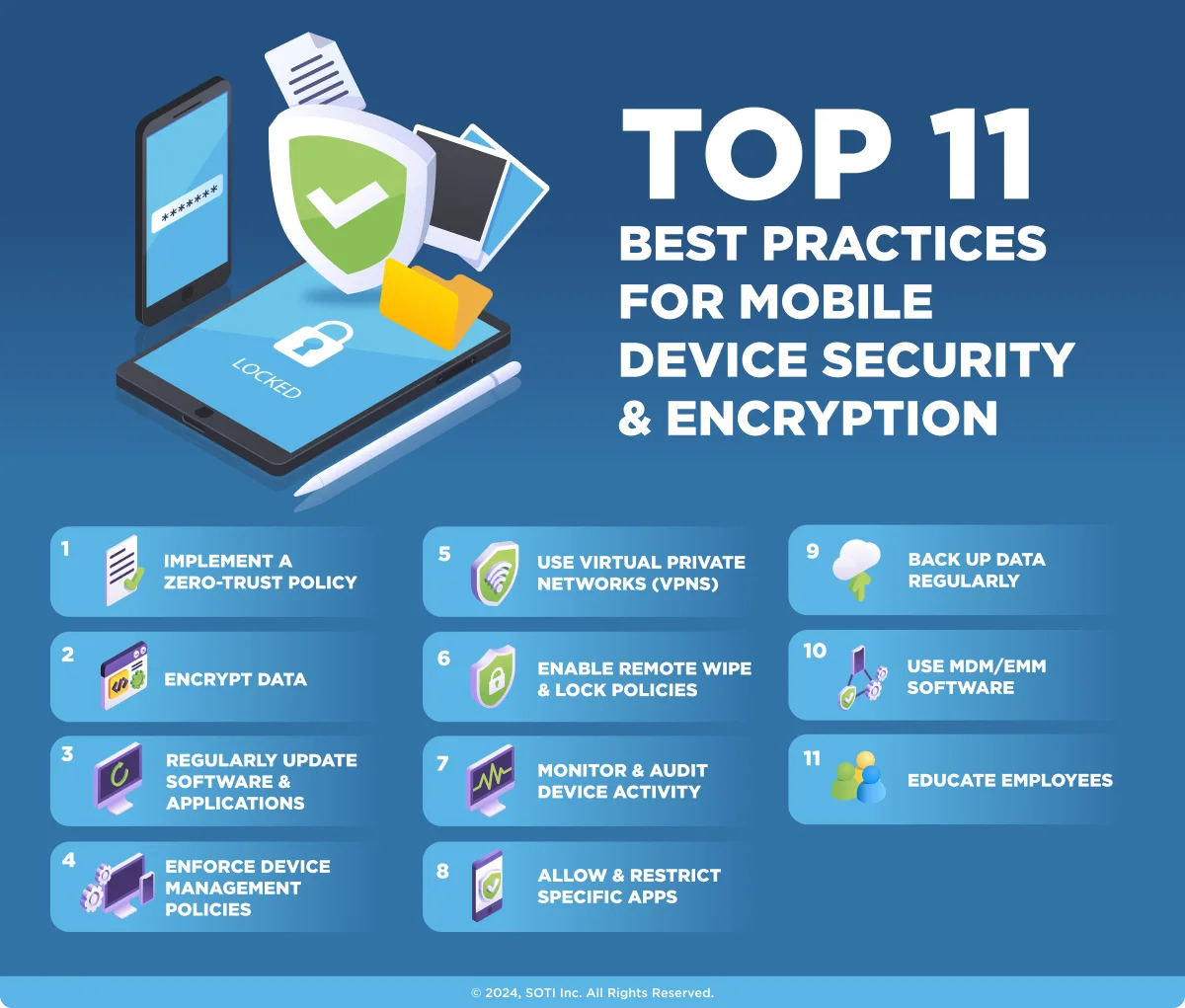
1. Implement a Zero-Trust Policy
-
Require users to set unique strong passwords.
-
Discourage employees from sharing passwords.
-
Encourage the use of multi-factor authentication or biometric methods.
-
Advise against clicking links from unfamiliar senders or downloading software from unfamiliar sources.
-
Avoid sharing personal information with unverified websites or individuals.
-
2. Encrypt Mobile Data to Prevent Data Breaches
-
Encrypt data stored on mobile devices, including mobile app encryption, to protect against unauthorized access in case of loss or theft.
-
Use symmetric or asymmetric encryption methods for enhanced security.
-
3. Update Mobile OS & Aps to Patch Security Vulnerabilities
-
Keep mobile operating systems and apps up to date to patch vulnerabilities and prevent attacks.
-
Schedule routine audits to ensure regular updates on all devices.
-
4. Strengthen Mobile Device Security with Management Policies
-
Implement policies to enforce security settings, such as password protection and encryption.
-
Ensure leaders adhere to policies.
-
5. Protect Mobile Connections with Secure Virtual Private Networks (VPNs)
-
Reduce mobile network hacking risks by mandating VPN usage when accessing sensitive information or connecting to public Wi-Fi networks. Public Wi-Fi networks are insecure and commonly targeted by criminals.
-
Minimize the use of public Wi-Fi for remote work.
-
6. Enable Remote Wipe & Lock Features for Lost Devices
-
Activate remote wipe and lock features on company-owned devices.
-
Enable IT teams to remotely erase data and prevent unauthorized access in case of theft or device loss.
-
7. Monitor Mobile Device Activity to Detect Cybersecurity Threats
-
Regularly monitor and audit device activity to detect suspicious behavior or unauthorized access.
-
Address vulnerabilities through proactive measures, such as vulnerability assessments and penetration testing.
-
8. Control Mobile App Usage to Reduce Security Risks
-
Control app installation and usage.
-
9. Back Up Mobile Data to Prevent Loss from Malware or Device Failure
-
Encourage regular data backups to prevent loss in case of device damage or failure.
-
Automate backups using cloud platforms for seamless data protection.
-
10. Secure Mobile Devices Using MDM/EMM Software
-
Employ Mobile Device Management or Enterprise Mobility Management software to manage and secure devices remotely.
-
Gain insights into business operations and enforce policies on all devices.
-
11. Train Employees on Mobile Device Security Best Practices & Cybersecurity Threats
-
Provide ongoing training on mobile device security best practices and the importance of data protection.
-
Offer background context on new policies and illustrate with real-life examples of cybercrime.
-
Encourage employee participation and behavior change through effective leadership and training initiatives.
Employee Advocacy: How Training Reduces Mobile Security Risks
In addition to technical safeguards, organizations must focus on training employees on cybersecurity best practices.
By fostering a culture of awareness and accountability, businesses can empower employees to play an active role in protecting their mobile devices and data. Regular audits can help identify compliance issues and ensure security measures are being maintained.
Stay Ahead of Cybersecurity Threats with Mobile Device Security
As the threat landscape evolves, up-to-date security measures are essential. This involves regularly reviewing and updating security policies, staying informed about emerging threats and adapting security strategies accordingly.
IT managers should subscribe to mobile device security newsletters and encourage all employees to share any relevant news regarding the devices or software services they use.
Proactive Measures for Mobile Device Security
Effective mobile device security requires continuous monitoring and rapid response to security incidents. Post-incident analysis is crucial to learn and improve for the future.
Enterprise Mobility Management software provides important business intelligence insights to support a strong device security strategy. In addition, organizations should follow the Top Mobile Device Security Best Practices above for device security and encryption to protect sensitive data, mitigate risks and safeguard against potential threats.
Real-World Example: Trek Bicycle Corporation
Global brands like Trek Bicycle Corporation demonstrate the importance of strong mobile device security and management. With 17 offices around the world, Trek faced challenges in troubleshooting hardware issues, performing security updates and monitoring device health, which led to hours of unnecessary downtime.
By implementing SOTI MobiControl XS (SOTI MobiControl & SOTI XSight), Trek gained centralized visibility and control over its mobile endpoints. This enabled the IT team to:
-
Streamline and simplify its current processes to locate, manage and monitor its device fleet.
-
Seamlessly roll out necessary updates and security patches.
-
Proactively monitor device performance, provide fast user support and ultimately prevent downtime.
Trek’s success highlights how MDM/EMM solutions are critical for securing mobile devices at scale, reducing device downtime, and supporting seamless retail operations.